
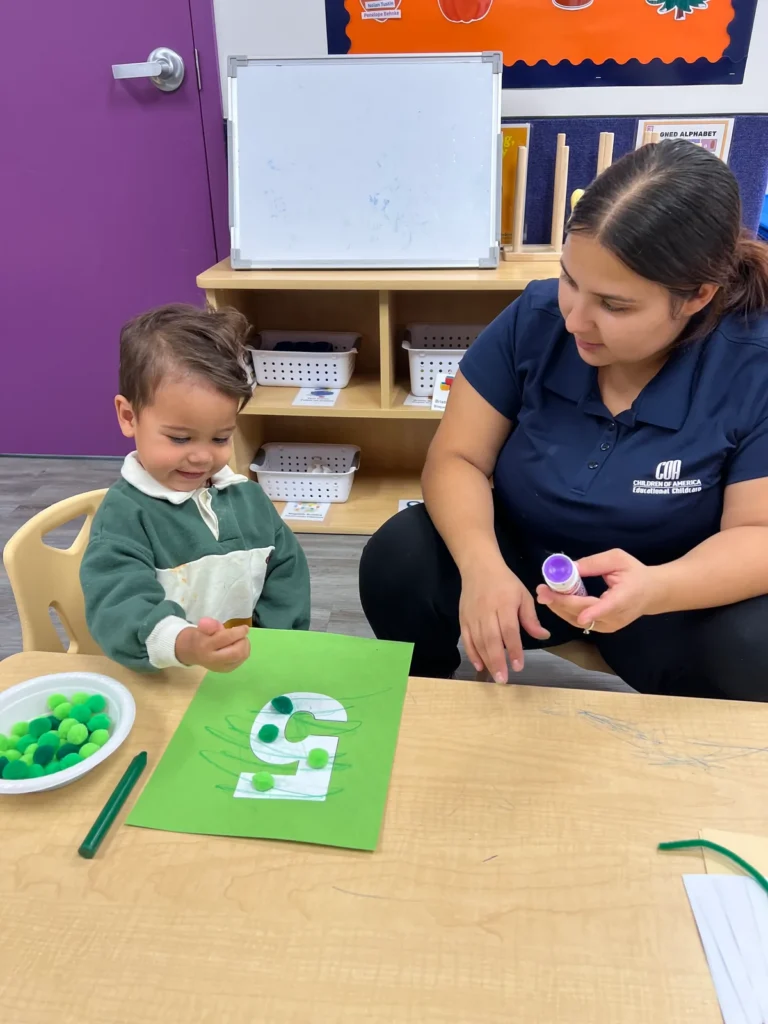
Educators
What Makes Teaching at a Corporate-Owned Childcare Company Different from a Franchise?
How a connected company structure can shape the support, resources, and career growth early childhood educators experience
When you are looking for a teaching position in early childhood education, it is easy to focus on the classroom itself. What age group will you teach? What curriculum will you use? What will your daily schedule look like?
But there is another factor worth considering: how the childcare organization itself is structured.
Some childcare centers operate as franchises, where individual locations are owned and operated by separate franchise owners. Others, like Children of America (COA), are corporately owned and operated.
That distinction may happen behind the scenes, but for educators, it can influence everything from training and classroom resources to professional development and long-term career opportunities.
What Does Corporate-Owned Childcare Mean?
In a corporate-owned childcare organization, schools are operated as part of the same company rather than by individual franchise owners.
For educators, that creates an opportunity for schools to work from shared expectations, educational programs, operational systems, and organizational resources.
At Children of America, that structure helps us maintain consistent care, structured programming, and high standards throughout our schools.
It also means that when an educator joins COA, they are joining something larger than one individual school.
How Is That Different from Working at a Franchise?
A franchise location is typically independently owned and operated under a larger brand. While the brand may establish certain requirements and systems, aspects of the employee experience can vary based on the individual franchise owner and location.
A corporate-owned model creates a more direct connection between each school and the organization supporting it.
That matters because early childhood educators already carry significant responsibility inside the classroom. Having established systems and resources behind them can allow teachers to spend more of their energy where it matters most: supporting children.
What Can a Corporate-Owned Structure Mean for Teachers?
1. More Consistency from School to School
Teachers should not have to reinvent the wheel every time they enter a new classroom.
Shared educational standards, policies, curriculum resources, and operating practices can create greater consistency throughout an organization.
At COA, our schools follow a shared educational philosophy centered on supporting the whole child socially, emotionally, intellectually, and physically.
Our proprietary Mind & Body Matters™ approach gives educators an established framework for creating meaningful learning experiences while still allowing teachers to bring their own creativity, relationships, and individual strengths into the classroom.
Consistency provides the foundation. Great educators bring it to life.
2. Resources That Extend Beyond One School
One of the advantages of belonging to a larger organization is having access to support beyond the four walls of your classroom.
Teachers are part of a broader network that includes school leadership as well as teams working behind the scenes to support curriculum, operations, training, safety, and professional development.
At COA, continued staff growth is part of our educational philosophy. We invest in ongoing professional development, training, and coaching so educators have opportunities to continue strengthening their skills throughout their careers.
That support is especially important in early childhood education, where licensing requirements, educational practices, safety expectations, and the needs of children and families continue to evolve.
3. Professional Development Has a Larger Infrastructure Behind It
Teachers deserve opportunities to learn, too.
Within a connected organization, professional development can be built intentionally into the employee experience rather than depending entirely on the resources available at one individual location.
At COA, our Education and Learning & Development teams help create training that supports educators and keeps school teams prepared as educational practices, licensing requirements, and operational expectations evolve.
COA educators also participate in Professional Development Days twice each year, with four dedicated hours of learning during each session.
Beyond these dedicated training opportunities, COA’s learning and development programs include CDA certification support, tuition reimbursement for early childhood education coursework, leadership mentorship programs, Campus Coach development, and career path planning.
The goal is not simply to complete required training. It is to help educators continue becoming stronger, more confident professionals.
4. Career Growth Can Extend Beyond a Single Classroom
For some educators, teaching is exactly where they want to stay. For others, the classroom becomes the beginning of a much longer career in early childhood education.
A larger organization can create more pathways to explore.
An educator may begin as a teacher and eventually become interested in mentoring other educators, school leadership, training, or other areas of the organization.
At COA, professional development is connected to long-term career growth, including leadership opportunities, mentorship, and career path planning.
Your next step does not always have to mean leaving the organization you already know.
5. Teachers Become Part of a Larger Community
Early childhood education is deeply personal work.
Every classroom has its own personality. Every teacher develops unique relationships with children and families. Every school builds its own sense of community.
Being part of a corporate-owned organization does not have to take that individuality away.
Instead, it can connect individual schools through a larger mission.
At COA, teachers across our schools are working toward the same goal: helping children grow into confident, capable learners while supporting their intellectual, social-emotional, and physical development.
That shared purpose creates something bigger than any single classroom.
Does Corporate-Owned Automatically Mean a Better Place to Teach?
Not necessarily.
Ownership structure alone cannot tell you whether a childcare center will be the right workplace for you.
Educators should still ask important questions when considering an early childhood education career:
- How are teachers supported by school leadership?
- What training and professional development are available?
- Is there a clear educational philosophy?
- Are teachers given the resources they need?
- Are there opportunities to grow professionally?
- Does the organization invest in its educators as well as its classrooms?
- Can you see yourself building a career there, not simply taking a job?
Those questions reveal much more about the experience you are likely to have.
What Does This Look Like at Children of America?
At COA, we believe strong schools are built by strong teams.
Our corporate-owned structure allows our schools to operate as part of one connected organization while educators continue building the personal relationships that make individual classrooms and school communities special.
Teachers have an established curriculum, organizational resources, professional development opportunities, leadership support, and potential career pathways behind them.
Most importantly, they have room to do what great early childhood educators do best: build relationships, inspire curiosity, create meaningful experiences, and help children grow.
Our philosophy recognizes our employees as continual learners, which is why learning and growth remain an important part of the COA experience.
Find More Than Your Next Teaching Job
The organization behind your classroom matters.
When your school is connected to a larger system of educational resources, professional development, shared standards, and career opportunities, your role has the potential to grow alongside you.
At Children of America, we want educators to see a future here.
Whether you are beginning your career in early childhood education, strengthening your skills as an experienced teacher, or preparing for your next leadership opportunity, COA is committed to supporting your growth and the impact you make every day.
Ready to explore your next opportunity in early childhood education?
Explore careers at Children of America and discover where your career can grow.
