
Families
How Can I Help My Child Adjust to Starting Daycare or Preschool This Fall?
Practical Tips to Help Your Child Feel Safe, Confident, and Ready for This Exciting New Chapter
Starting daycare or preschool for the first time is a big milestone, and it is completely normal for both children and parents to feel a mix of excitement and nerves heading into fall. The good news is that with a little preparation and the right support system in place, children adjust more quickly and confidently than most parents expect. The key is knowing what to do before the first day, what to expect in those early weeks, and how to choose a preschool or childcare program that makes the transition as smooth as possible.
Why the Fall Transition Can Feel So Big
For young children, starting daycare or preschool in the fall means navigating a completely new environment, new faces, new routines, and extended time away from the people they feel safest with. That is a lot to process, especially for children who have not spent significant time in group settings before.
Separation anxiety is one of the most common experiences during this transition. According to the American Academy of Pediatrics, separation anxiety typically peaks between 10 and 18 months and can resurface whenever a child enters a new environment. Crying at drop-off, clinging, or acting out at home are all normal responses, not signs that something is wrong or that your child is not ready.
Understanding why the transition feels hard is the first step toward making it easier for everyone.
How to Prepare Your Child Before the First Day
The weeks leading up to the first day of preschool or daycare are some of the most valuable for setting your child up for a confident start. Here is what works.
1. Talk About It Early and Often
Children feel more confident about new experiences when they know what to expect. Start talking about school a few weeks out in simple, positive terms. Tell your child what a typical day might look like, what they will do, who they might meet, and that you will always come back at the end of the day.
Avoid building it up too much or projecting your own anxiety. Children are incredibly perceptive and will pick up on whatever energy you bring to the conversation.
2. Visit the School Together Before Day One
If the program offers a tour or orientation session, take advantage of it. Walking through the classroom, seeing where the bathrooms are, meeting the teacher, and exploring the playground before the first official day helps the environment feel familiar rather than foreign when school actually starts.
Familiarity is one of the most powerful tools for reducing a child’s anxiety about new experiences.
3. Practice the Morning Routine
A rushed, chaotic morning makes everything harder. A few weeks before school starts, begin waking up at the time you will need to during the school year. Practice getting dressed, eating breakfast, and leaving the house at the right time so none of it feels like a shock on the first day.
Predictable mornings help children feel in control, which directly reduces anxiety around the school day ahead.
4. Read Books About Starting School
Children’s books about starting preschool or making new friends are a wonderful, low-pressure way to introduce the idea of school and normalize the feelings that come with it. When a character in a book feels nervous but ends up having a great day, it gives children a framework for understanding their own emotions and what might be waiting for them on the other side of that first morning.
5. Create a Goodbye Ritual
A consistent, brief goodbye ritual gives children something to anchor to every morning. It might be a special handshake, three hugs and a high five, or a simple phrase you say every time. Whatever it is, keep it the same each day.
The most important thing is to say goodbye clearly and leave promptly. Lingering or sneaking out both make separation harder. A confident, warm goodbye communicates to your child that you trust this place and the people in it, and that feeling transfers directly to them.
What to Expect in the First Few Weeks
Even with excellent preparation, the first weeks of preschool or daycare often come with some bumps. Knowing what is normal helps parents stay calm, which in turn helps children settle in faster.
Common experiences in the first few weeks include:
- Crying at drop-off that stops within minutes of the parent leaving
- Clinginess or regression at home, such as wanting a bottle or pacifier again
- Fatigue after school as the child processes all the new stimulation
- Resistance to going in the morning even when the previous day went well
- Stronger emotional reactions in the evenings as children decompress from the day
All of these are normal. Most children settle into a new preschool or daycare routine within two to four weeks. If you are concerned that your child is struggling significantly beyond that window, it is always a good idea to connect with their teacher or pediatrician.
How the Right Childcare Program Makes Adjustment Easier
Not every preschool or childcare environment is equally equipped to support children through the transition to school. The quality of the program, the consistency of the daily routine, and the warmth of the teaching staff all play a significant role in how quickly and confidently a child adjusts.
When evaluating childcare programs for your child this fall, look for these markers of a transition-supportive environment:
- Low student-to-teacher ratios so every child is seen and supported as an individual from day one
- Predictable daily routines that give children the structure and consistency they need to feel safe
- Educators trained in social-emotional development who know how to support children through big transitions
- Clear, warm communication with families during the adjustment period
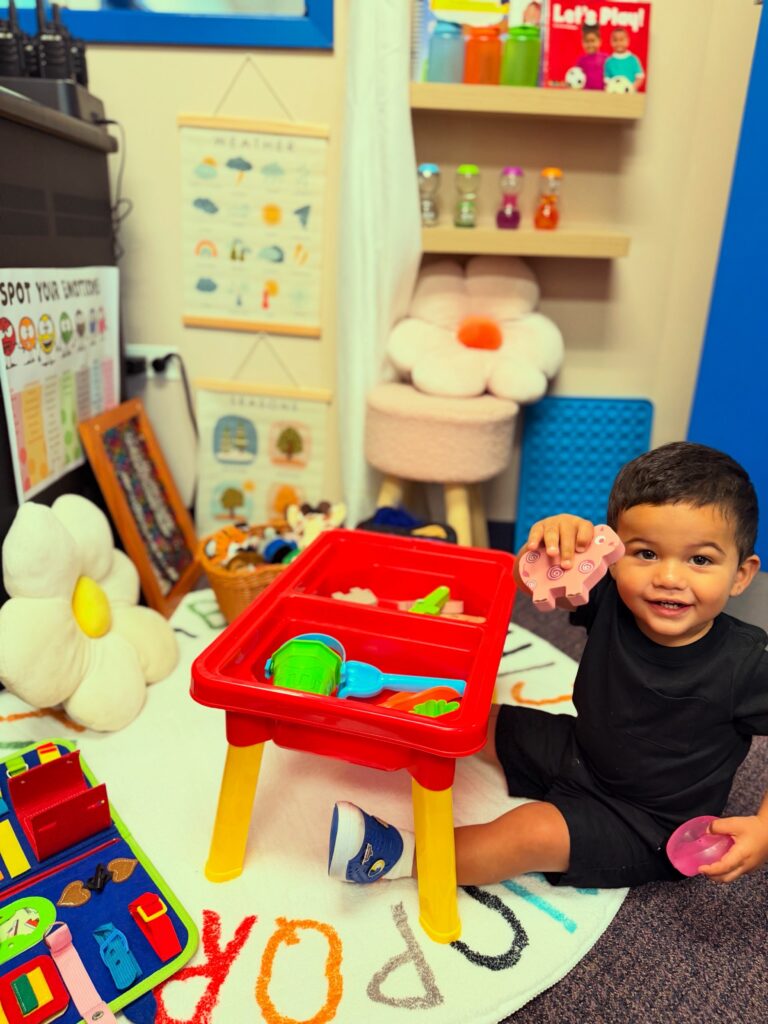
- Age-appropriate classrooms designed to feel welcoming, safe, and engaging from the moment a child walks in
The environment your child spends their days in matters as much as any strategy you put in place at home. Choosing the right program is one of the most powerful things a parent can do to set their child up for a successful fall transition.
How to Support Your Child at Home During the Adjustment Period
What happens at home during the first weeks of school matters just as much as what happens in the classroom. A few intentional practices can make a significant difference in how quickly your child finds their footing.
Keep Afternoons Low-Key
Starting school is exhausting for young children, even if they love it. Resist the urge to pack in activities or errands after pickup in the first few weeks. A quiet snack, some downtime, and connection with you goes a long way toward helping your child decompress and feel settled.
Ask Good Questions at the End of the Day
“How was school?” almost never gets a useful answer from a young child. Instead try asking more specific questions: What did you have for snack? Who did you sit next to at lunch? Did you go outside today? Specific, low-stakes questions open conversations that general ones do not.
Stay Consistent with Bedtime
A well-rested child handles transitions, new environments, and big emotions far better than a tired one. The American Academy of Pediatrics recommends that preschool-age children receive ten to thirteen hours of sleep per night. Prioritize an early, consistent bedtime during the fall adjustment period.
Celebrate Every Small Win
Did your child walk in without tears today? Make a new friend? Try a new food at lunch? Celebrate it. Children thrive on specific, genuine recognition of their efforts and progress. Noticing and naming their wins helps build the confidence and excitement that carries them through the harder mornings.
How Children of America Supports Your Child Through the Fall Transition
At Children of America, we understand that starting school is one of the biggest transitions a young child experiences, and we take that responsibility seriously. Every program at COA is designed to help children feel safe, welcomed, and genuinely excited from the very first day, through the Mind & Body Matters curriculum, a research-based approach that nurtures intellectual, social-emotional, and physical development through four signature programs:
- STAR Curriculum — A structured, thematic academic program that builds foundational knowledge in math, literacy, science, and social studies while encouraging curiosity and confidence
- Presidential Fitness Program — Daily movement and exercise routines that develop gross and fine motor skills, balance, coordination, and body awareness
- Just Read Program — A character-driven literacy program led by COA mascot Bentley, featuring custom-written books that build listening comprehension, imagination, and a love of reading
- Apple A Day Nutrition Program — Family-style meals that build healthy food choices, self-help skills, and positive social interactions around the table
Every family that chooses Children of America also receives:
- Age-appropriate classrooms and learning experiences for infants through school-age children
- Social-emotional learning that builds confidence, communication, and positive relationships
- Daily physical activity and wellness programming to encourage healthy habits
- Nutritious meals and snacks throughout the day to fuel growing minds and bodies
- Summer Camp WOW featuring weekly themes, outdoor play, and hands-on projects with the same safety standards as our school-year programs
Our low student-to-teacher ratios mean your child is known as an individual from the very first day. Our trained educators specialize in building the warm, consistent relationships that help children feel safe enough to explore, connect, and grow. And our structured daily routines give children the predictability they need to settle in quickly and confidently.
You are part of the COA family the moment you walk through our doors, and that welcome extends to every child in our care every single day.
Find a Children of America School Near You This Fall
If you are looking for a preschool or childcare program that will make this fall transition as smooth and positive as possible for your child, we would love to show you what that looks like in person.
Click the Find A School button in the top right corner of the Children of America website to search for a location near you and schedule a tour. Come meet our teachers, see our classrooms, and experience the environment where your child can start this next chapter feeling safe, confident, and ready to grow.
References
American Academy of Pediatrics. (2023). Separation Anxiety. HealthyChildren.org. https://www.healthychildren.org/English/ages-stages/toddler/Pages/Separation-Anxiety.aspx
American Academy of Pediatrics. (2024). How Much Sleep Do Children Need? HealthyChildren.org. https://www.healthychildren.org/English/healthy-living/sleep/Pages/how-much-sleep-do-children-need.aspx
American Academy of Pediatrics. (2022). The Importance of Play in Promoting Healthy Child Development and Maintaining Strong Parent-Child Bonds. Pediatrics, 129(1). https://publications.aap.org/pediatrics/article/129/1/e204/31699
National Association for the Education of Young Children (NAEYC). (2023). Transitions: Supporting Children When Routines Change. NAEYC.org. https://www.naeyc.org
