
Families
Prepared, Not Panicked: How Two Illinois Childcare Centers Weathered the Storm
Prepared, Not Panicked: How Two Illinois Childcare Centers Weathered the Storm
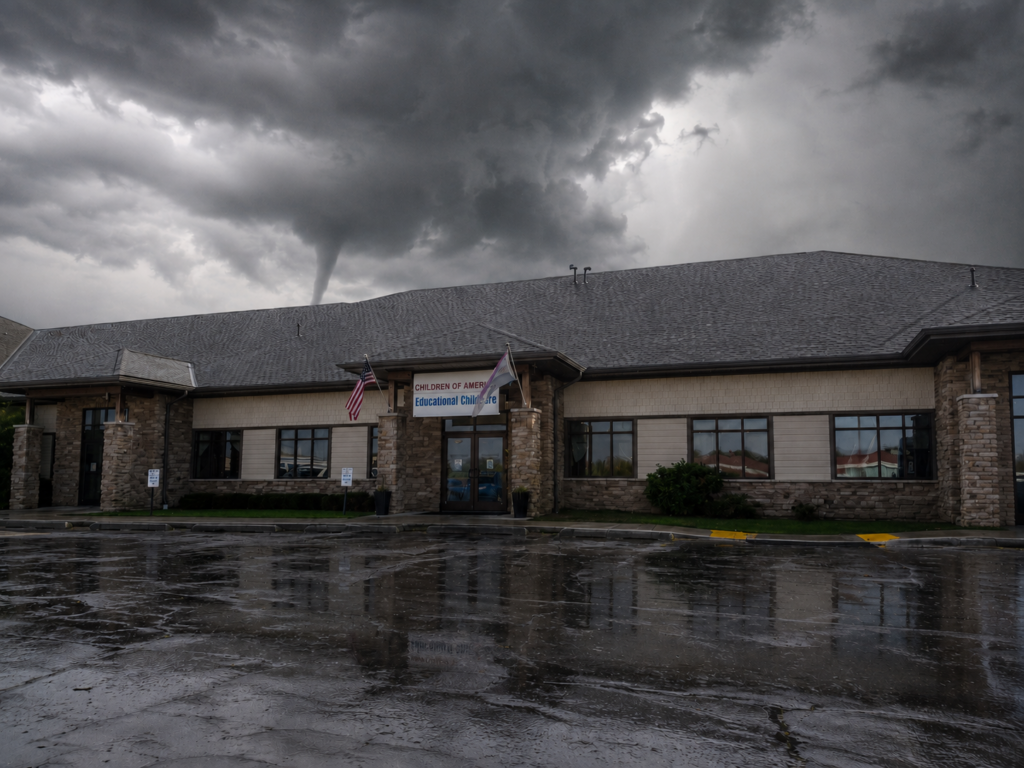
When severe weather sirens sound, most parents picture their children somewhere far away, out of reach, and it’s the single most unsettling feeling in the world. But for the families of Children of America in Flossmoor and Orland Park, Illinois, that scenario recently became real. Tornadoes touched down near both centers, and one caused direct structural damage to the building. What happened next says everything about why disaster preparedness in childcare isn’t a box to check off during licensing season. It’s a practiced, living skill that shows up exactly when it’s needed most.
When the Sirens Sounded
At both the Flossmoor and Orland Park centers, the warning came the way it always does: a siren, an alert, and a narrow window to act. There was no time to deliberate. The teams didn’t need it, because they already knew exactly what to do.
“Once we receive the warning or hear sirens, the teachers gather all of the kids into a bathroom on an inside wall or in the hallway,” explained Katie Retterer, Executive Director overseeing the region. “The infants are put into the emergency evacuation cribs and also put into adult bathrooms, breakrooms, or wherever is safe for them.”
Within moments, both centers had every child, from the youngest infants to the school-age kids, moved into interior, windowless spaces, the safest possible locations within each building. Teachers and directors moved through their well-worn drill procedures almost automatically, a testament to how many times they’d practiced exactly this scenario when the stakes were nothing more than a timer and a checklist.
Keeping the Calm When the World Outside Wasn’t
Any parent knows that a child’s sense of safety often has less to do with what’s actually happening and more to do with the tone of the adult in the room. This is where the teams at Flossmoor and Orland Park didn’t just execute a plan; they showed the heart behind it.
At Flossmoor, director Tyra became something of a quiet hero in a moment that could have gone very differently. As the storm passed directly over the building, she could be heard singing lullabies to the children huddled around her, turning an uncertain and frightening stretch of time into something softer. “Tyra yesterday with her video was great with the singing and trying to keep the kids calm during a very unknown timeframe,” Katie said.
Yvette Vana, also an Executive Director for the region, echoed the sentiment. “I absolutely love what Tyra and the Flossmoor team did to keep the children calm and actually having fun while being safe,” she said.
At Orland Park, director Heather led her team through a story that unfolded a little differently, but with the same steady hand. The tornado warning came during naptime, which meant teachers had to move children from their cots to shelter-in-place locations in a matter of minutes. Rather than a moment of chaos, it became almost seamless.
“The consistency of the drills kept the children calm while they all moved from their cots at naptime to shelter in place,” Yvette explained. “The teachers talked with the kids, sang songs, and read stories while they waited for the all clear. The teachers kept the children so calm that they went back to sleep once the threat was over.”
That detail is worth sitting with for a moment. Orland Park actually sustained structural damage to the building that day. And still, by every account, the children inside experienced something closer to a cozy, unusual afternoon with friends than a natural disaster. “Orland Park actually took on structural damage to the building, but the kids just had a fun experience with their friends,” Yvette said.
A Grandmother’s-Eye View
For Yvette, the day carried an added layer of meaning. Her own grandson attends the Orland Park center. “He told me that the tornado was not at his school but close by, and that he and his friends got up during naptime for a little bit. He was so calm,” she said. “I was extremely grateful as a grandparent at the quick action the Orland Park team had, as well as proud as an Executive Director that my team consistently practiced safety procedures so it was so natural for everyone.”
It’s one thing to hear from leadership that a plan worked. It’s another to hear it from someone experiencing the day both as an executive responsible for dozens of centers and as a grandparent whose own grandchild was inside the building. Her words capture the real measure of success here: not that nothing went wrong, but that the people entrusted with these children responded so naturally, so calmly, that a tornado became, in a young child’s memory, little more than an unusual break from naptime.
Why Drills Matter More Than People Realize
It’s easy to think of fire drills and severe weather drills as routine, even a little tedious, tucked into a monthly compliance checklist. But what happened in Flossmoor and Orland Park is the clearest possible argument for why they matter. When the real thing happens, there is no time to figure out a plan. There’s only muscle memory, and the calm that comes from having done something enough times that it no longer feels like an emergency, it just feels like Tuesday.
That’s exactly what Yvette pointed to when reflecting on Orland Park’s response: it wasn’t luck, and it wasn’t improvisation. It was the direct result of a team that treated every drill as if it might someday be real. When the day came, nobody had to think. They just did what they’d trained to do, and they did it with warmth.
What Families Can Expect During Severe Weather
For parents wondering what happens behind the scenes when a warning is issued at a Children of America center, the process is consistent across locations. Children are moved immediately to interior rooms away from windows, typically bathrooms or hallways on inside walls. Infants are transferred into emergency evacuation cribs and relocated to the safest available space, whether that’s an adult restroom or a breakroom. Teachers stay with their groups the entire time, using songs, stories, and calm conversation to keep children engaged rather than frightened. Meanwhile, center managers notify families the moment the center goes into shelter-in-place, and again the moment the all-clear is given, so no parent is left wondering.
It’s a simple structure, but its power is in the consistency. The same steps, practiced the same way, every single time, are what allow a team to move a room full of toddlers into a hallway in under a minute without anyone panicking, including the toddlers.
Gratitude, and a Model Worth Sharing
Stories like these rarely make headlines outside the communities they touch, but they deserve to. What happened in Flossmoor and Orland Park is a reminder that childcare centers are entrusted with something enormous, and that the difference between a frightening day and a manageable one often comes down to preparation that happens long before the sirens ever sound.
To Tyra and Heather, to the Flossmoor and Orland Park teams, and to every teacher who sang a song or read a story to keep a room of children steady through a storm, thank you. It’s a powerful example of what happens when planned drills meet prepared, caring directors: children who felt safe, families who were kept informed every step of the way, and a team that turned a genuinely dangerous moment into proof of just how ready they were.
